Study Abroad – UK | University & College Guides
2 minutes of reading time
Posted by Adiba Islam
Summary
This blog discusses practical strategies that help students improve academic performance while maintaining their wellbeing. It explores topics such as goal setting, effective study habits, time management, motivation, and healthy daily routines that support long term academic success.
Academic success is not just measured by grades. Real achievement comes from building strong habits, planning effectively, and taking care of personal wellbeing. When students balance academic performance with their health, success becomes sustainable rather than stressful.
Students who develop these strategies early tend to perform better, gain more confidence, and remain consistent throughout their academic journey.
Students who set clear goals usually perform better because they understand what they are working toward. Clear goals reduce confusion and help students focus their effort more effectively.
Effective goal setting should include:
Short term academic goals such as weekly study targets
Long term goals like degree completion or career planning
Personal wellbeing goals including rest, sleep, and balance
Large goals should always be broken into small actions. Instead of saying “study more,” a better goal is “study two focused hours every weekday.”
Tracking progress matters as much as setting goals. Reviewing goals weekly helps students stay motivated and adjust workloads before stress builds up.
Clear goals turn pressure into structure and effort into results.

A calm, supportive space where students can relax, reflect, and prioritise their wellbeing.
Strong study habits matter more than talent. Consistency beats last minute effort every time.
Explore more
Frequently Ask Question
Studying at the same time each day
Using short focused sessions instead of long unfocused hours
Reviewing material regularly rather than cramming
Studying in a quiet, distraction free environment
Students should focus on active learning techniques such as summarizing notes, explaining concepts out loud, and regularly testing their understanding. These methods strengthen retention and deepen comprehension. In contrast, passive reading may feel productive but often results in weaker understanding and limited long term recall.
A stable routine improves memory, confidence, and control over academic tasks.
Poor time management is a major reason many students feel overwhelmed. When deadlines start to pile up, stress levels rise and overall wellbeing begins to decline.
Practical time management strategies include:
Creating weekly study schedules
Prioritizing urgent and important tasks
Limiting multitasking
Planning breaks intentionally
A simple rule works well. Plan the week before it begins. Students who schedule assignments early experience fewer late nights and less anxiety.
Activity | Suggested Hours |
Classes | 15 to 20 |
Independent study | 20 to 25 |
Revision and review | 5 to 8 |
Rest and personal time | 15 to 20 |
Physical activity | 3 to 5 |
Balanced planning protects wellbeing while maintaining academic performance.
Wellbeing does not improve through motivation alone. It improves through structure and consistency.
Healthy routines that support academic success include:
Sleep: 7 to 9 hours improves memory and focus
Nutrition: Regular meals maintain energy levels
Movement: Light exercise reduces academic stress
Breaks: Short rest periods prevent mental fatigue
Many students overlook these basic habits. Poor sleep and irregular meals reduce concentration, even when study habits are strong.
Wellbeing should be considered part of academic planning, not something separate from it.

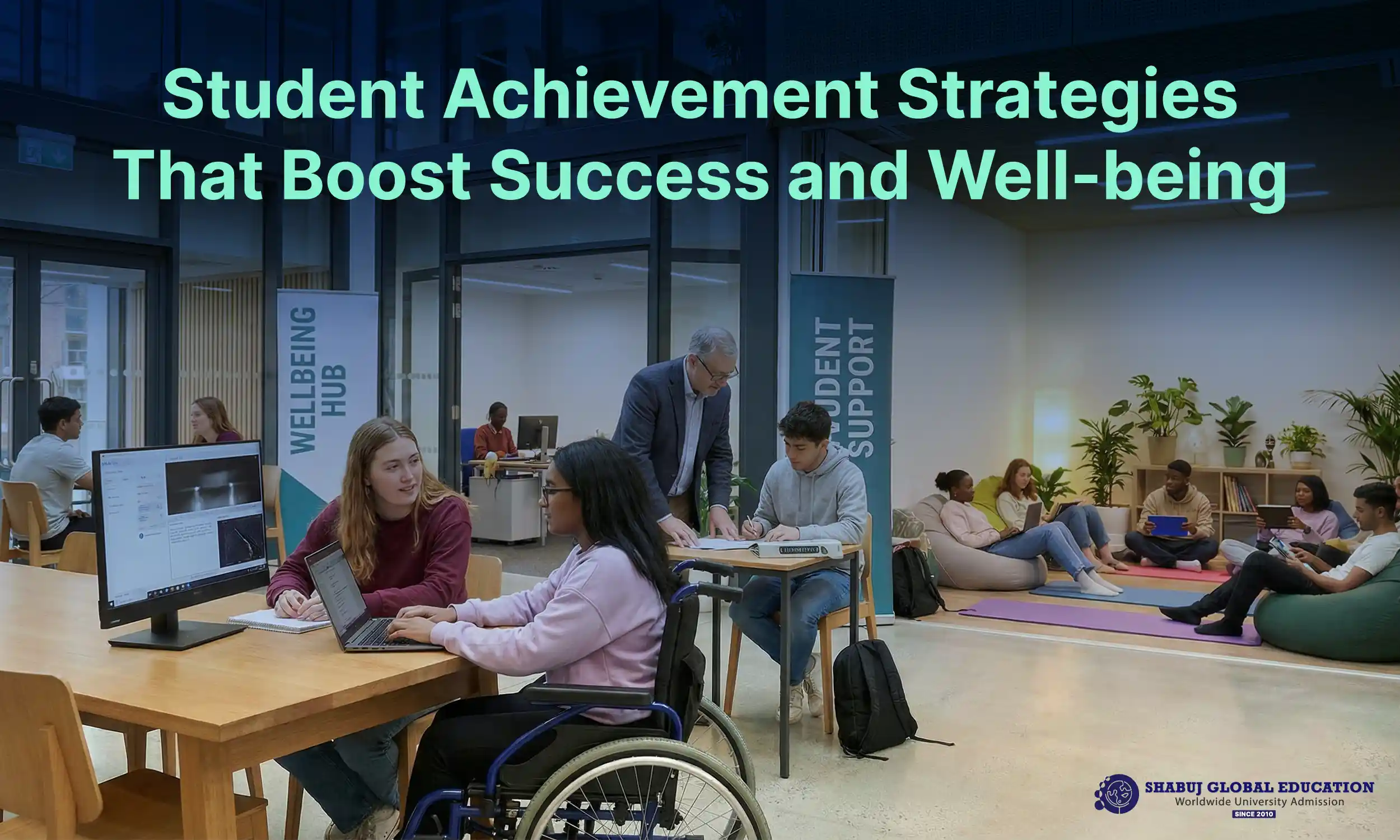
Confidence begins on campus, where learning and opportunity meet.
Motivation changes daily. Discipline keeps progress steady.
Successful students rely on systems rather than feelings. Strong accountability habits include:
Creating daily task lists
Reviewing progress each evening
Studying with clear start and stop times
Reflecting weekly on what worked and what did not
Measuring effort instead of perfection builds confidence. Small consistent actions create long term results.
Comparing progress with others can slow improvement. Students achieve more when they focus on improving their own systems and habits.
Achievement strategies are only effective when students review and adjust them regularly. Ignoring problems allows stress to build over time.
Effective review habits include:
Monthly self reviews of academic performance
Identifying weak subjects early
Adjusting study methods when results drop
Rebalancing workloads before burnout appears
Students should ask simple questions during reviews. What is working? What feels overwhelming? What needs adjustment?
Regular reflection helps students stay in control of their progress and prevents long term academic frustration.
Student achievement strategies are most effective when used together. Goals provide direction, routines build structure, and wellbeing sustains performance.
When students build these habits early, they develop:
Strong academic confidence
Lower stress levels
Better focus and consistency
Healthier study life balance
These skills extend beyond education. They support career growth, professional discipline, and lifelong learning.
To see how these achievement habits translate into real career opportunities, explore our complete guide on Top Accounting and Finance Courses for Professional Success.

For Bangladeshi students planning to study in the UK, choosing the right academic pathway matters.
Shabuj Global Education (SGE), the Official Exclusive Partner of Bloomsbury Institute London, provides:
Free application support
Guidance on program selection
Help with documentation and university communication
Pre CAS interview preparation
Visa assistance
Step by step admission support
Students receive a smooth, safe, and fully guided admission process from start to finish.
Learn more about academic programs through Bloomsbury Institute London’s official website.
Real achievement doesn’t happen overnight. It develops through daily discipline, effective planning, and consistent wellbeing habits.
Students who establish the right systems early set themselves up for lasting success beyond graduation.
If you’re preparing for higher education or planning your study journey in the UK, take the next step with expert guidance.
Contact Shabuj Global Education (SGE) today and start building a confident, balanced path toward academic success.