Academic Quality Assurance | Study Abroad – UK
2 minutes of reading time
Posted by Adiba Islam
Summary
This blog explains how pre-module assessment planning helps universities design better courses. It covers alignment with learning outcomes, workload management, planning tools, quality improvement processes, and how structured assessment design supports transparency and academic standards.
Effective course design begins long before teaching starts. Pre-module assessment planning ensures that assessments are aligned with learning outcomes, logically structured, and operationally feasible. When universities plan assessments early, they create clarity for students, reduce workload conflicts, and maintain consistent academic standards.
At institutions such as Bloomsbury Institute London, assessment planning is integrated into curriculum development and quality assurance processes. Structured workflows connect learning outcomes, teaching activities, and evaluation methods to ensure coherence across modules.
Planning assessments in advance strengthens academic quality and operational efficiency. It allows universities to:
Explore more
Frequently Ask Question
Define clear expectations for student performance
Align assessments with course objectives
Schedule tasks strategically across the semester
Coordinate academic staff and moderation processes
Reduce last-minute adjustments
Well-structured planning improves transparency and ensures students understand how their performance will be evaluated.
For a broader understanding of how structured systems support academic quality, see our related article on Assessment and Feedback Systems in Higher Education, which explains how institutions manage grading, moderation, and feedback workflows. (parent link)
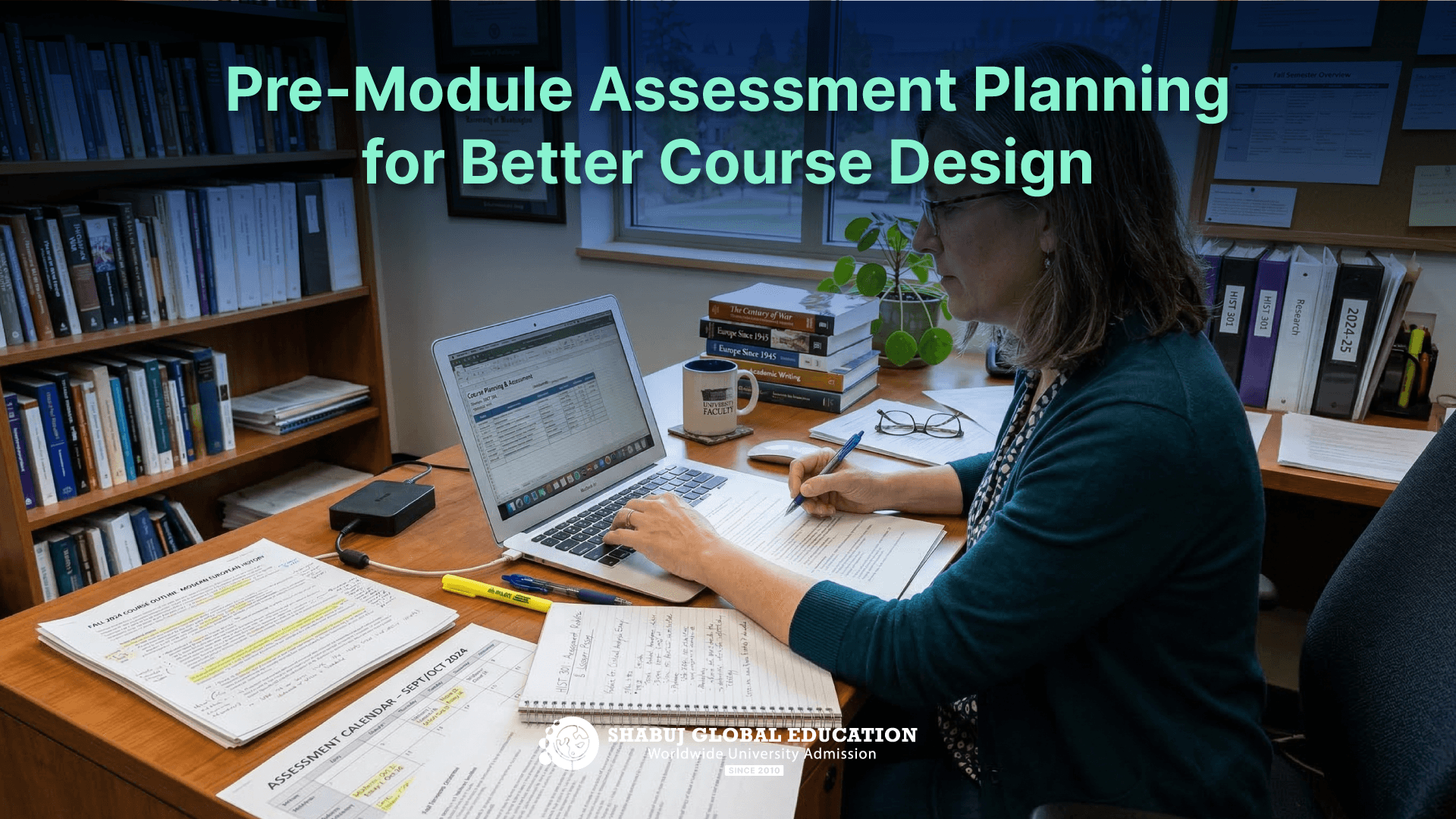
 A faculty member maps out a course structure to ensure that every module aligns with specific assessments and learning timelines.
One of the most important aspects of pre-module planning is curriculum alignment. Each assessment should directly measure specific learning outcomes.
Key alignment practices include:
Mapping assessments to defined course outcomes
Ensuring tasks evaluate the intended skills or knowledge
Sequencing assignments so learning progresses logically
Reviewing assessment methods for consistency
When alignment is completed at the planning stage, courses become more coherent and learning becomes structured rather than fragmented. This improves both academic integrity and student performance.
Assessment planning also helps universities balance student workload. Overlapping deadlines or excessive complexity can reduce engagement and performance.
Effective workload management includes:
Spacing assessments across teaching weeks
Balancing formative and summative tasks
Providing sufficient preparation time
Integrating structured feedback opportunities
By considering workload early, institutions create manageable learning environments that support academic success without unnecessary pressure.
Universities use structured tools to make assessment planning systematic and repeatable.
Common tools include:
Planning templates for outcome mapping
Academic calendars for scheduling coordination
Workload tracking systems
Quality assurance frameworks
Internal review processes
For example, structured planning at Bloomsbury Institute supports alignment between assessment schedules, marking responsibilities, and feedback timelines. This integration improves operational efficiency and ensures academic standards are maintained consistently.
Using such structured checklists helps institutions identify gaps early and strengthen course design.
Pre-module planning is not a one-time task. Universities regularly review assessment design through quality assurance processes. This includes analyzing assessment outcomes, reviewing feedback effectiveness, and updating planning frameworks when necessary.
Institutions also rely on external academic standards and internal review cycles to maintain consistency and transparency.
According to guidance from the Quality Assurance Agency for Higher Education (QAA), structured planning and curriculum alignment are essential components of maintaining academic standards and programme quality in higher education.
For many international students, understanding university assessment structures and course planning frameworks can be challenging at first.
Shabuj Global Education (SGE) provides comprehensive guidance to help students prepare for study in the UK. Support includes:
University and programme selection
Application document preparation
Admission guidance
Pre-CAS interview preparation
Visa support assistance
If you are planning to study at Bloomsbury Institute London, contact Shabuj Global Education today for step-by-step guidance and professional support throughout your application journey. Early preparation ensures a smoother transition into university assessment systems and academic expectations.
Pre-module assessment planning plays a critical role in improving course design in higher education. By aligning assessments with learning outcomes, managing student workload, and using structured planning tools, universities create coherent and effective academic programmes.
When integrated into institutional quality systems, assessment planning enhances transparency, consistency, and overall learning quality. Well-designed modules benefit both students and academic staff by promoting clarity, fairness, and operational efficiency.